This summary was prepared by our paralegal Ema Lulić, a student of Animal Sciences, as part of her thesis research on gene modification in equine sport. The thesis was supervised by Debby Gudden, Lecturer-Researcher at VHL University of Applied Sciences.
Gene modification in equine sport is already scientifically feasible and starting to materialise in practice, while the corresponding legal and regulatory responses remain in a phase of development and refinement. The focus of this summary is to explain the underlying science, the current approaches of key regulators, and the main welfare and liability questions that will shape future debates in this area.
Scientific basis and techniques
Modern gene editing technologies such as CRISPR Cas systems, viral vector gene transfer and RNA based gene silencing enable targeted modification of performance related traits, including muscle mass, stamina and recovery capacity. CRISPR Cas systems are tools that let scientists cut and change DNA at very specific points, like using tiny programmable scissors. Viral vector gene transfer uses harmless modified viruses as delivery trucks to carry new genetic instructions into the horse’s cells, while RNA based gene silencing works by turning down or switching off certain genes so the body makes less of a particular protein that might limit performance or cause inflammation. Myostatin MSTN editing in equine embryos and the emergence of commercially promoted CRISPR edited foals in Argentina, produced both through cloning and targeted gene modification, demonstrate that genetic modification of sport horses is no longer a purely theoretical concern. In practice, gene modification in this context may involve inserting new genes for example EPO to enhance red blood cell production, silencing genes that limit performance, or directly editing DNA; newer base and prime editing methods make these interventions increasingly subtle and difficult to distinguish from naturally occurring variants, and can be understood as very precise ways of gently changing one small part of the DNA at a time, similar to correcting a single letter in a long piece of text rather than cutting and pasting whole sections. It is important to note that genetic changes made very early in the embryo can be passed on to future generations, and if such a change later proves harmful or unstable, it could affect all descendants from that line and potentially damage an entire bloodline.
Detection limits and WADA FEI practice
Traditional anti doping tests were designed to detect foreign substances rather than changes to genetic material, prompting new molecular strategies for controlling genetically based enhancement. The World Anti Doping Agency has introduced laboratory guidance focusing on PCR based detection of gene transfer targets such as EPO and has encouraged research into targeted sequencing and patterns associated with genome editing. Nonetheless, these approaches remain largely confined to a limited set of targets, and methods for reliably identifying small, precise genome edits, especially in equine samples, are still evolving. Key challenges include short detection windows, rapid breakdown of temporary genetic material and the difficulty of differentiating edited variants from normal genetic diversity. In equine sport, certain racing jurisdictions, notably in Japan and the United Kingdom, have invested in multigene PCR platforms and related infrastructure, but there is not yet an internationally harmonised standard for routine genetic modification testing in horses.
FEI IFHA and regulatory gaps
Sporting regulators have begun to address gene modification at rulebook level, but their approaches differ in scope and operational detail. The International Federation of Horseracing Authorities has expressly condemned performance related genetic modification and embedded specific provisions within its anti doping rules, accompanying this with investment in racehorse focused detection initiatives. The FEI has expanded its regulatory framework in the 2025 Veterinary Regulations to include detailed definitions of gene therapy, gene editing and genome editing, and has clearly prohibited the use of gene modification for performance enhancement in equestrian disciplines. However, practical implementation tools, such as validated equine genetic testing methods, laboratory accreditation standards and explicit procedures for handling genetic evidence, are still being developed. At the same time, the FEI’s existing acceptance of cloned horses and their progeny illustrates how different biotechnologies may coexist within sport, potentially complicating future boundary setting between permitted and prohibited forms of genetic intervention.
Broader legal and governmental framework
Public law regimes add another layer to the regulatory picture. In the European Union, the Court of Justice has held that gene edited organisms fall under the same GMO framework as other genetically modified organisms, which significantly restricts the use of gene edited animals outside controlled research settings. In England, the Genetic Technology Precision Breeding Act 2023 introduces the category of precision bred organisms whose genetic changes could have arisen naturally, reducing regulatory barriers for such animals subject primarily to welfare safeguards; this definition is broad enough to include sport horses and has prompted concern among some welfare organisations. In many other jurisdictions, gene edited animals are regulated under general biotechnology or GMO laws that focus on agriculture, food safety and biomedical research rather than sport, leaving the regulation of performance related gene modification in horses largely to sport governing bodies such as the FEI, IFHA and national authorities.
Welfare, ethics and liability
The scientific and ethical literature stresses that performance oriented genetic modification may carry significant welfare risks, including unpredictable physiological effects, potential masking of pain or underlying pathology and the lack of meaningful consent from horses. These issues feed into broader debates about fairness and sporting integrity and have prompted proposals to distinguish clearly between therapeutic gene therapy and enhancement, including the possible future use of genetic Therapeutic Use Exemption concepts for legitimately necessary medical interventions. Existing strict liability models in anti doping regulation, which typically focus on riders, trainers and sometimes owners, may be difficult to apply when genetic changes occur at the embryo or breeding stage, long before a horse enters competition. This raises unresolved questions about how responsibility should be allocated between breeders, previous and current owners, trainers and veterinarians in potential cases involving genetic modification, and highlights the need for further work on evidentiary standards, welfare safeguards and coherent allocation of liability as these technologies become more integrated into equine sport.
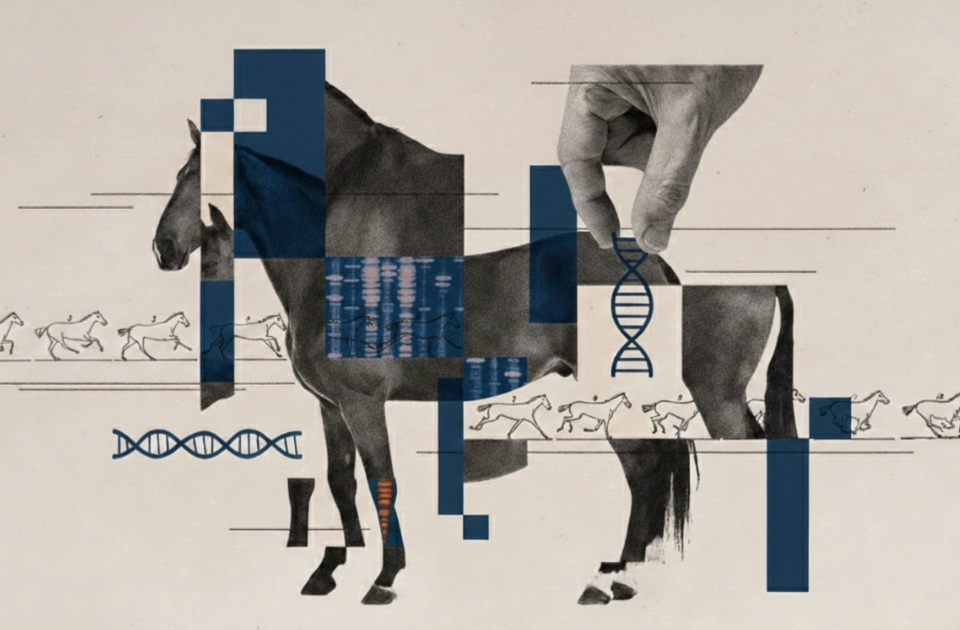
(Illustration by Julia Wytrazek / Getty Images)