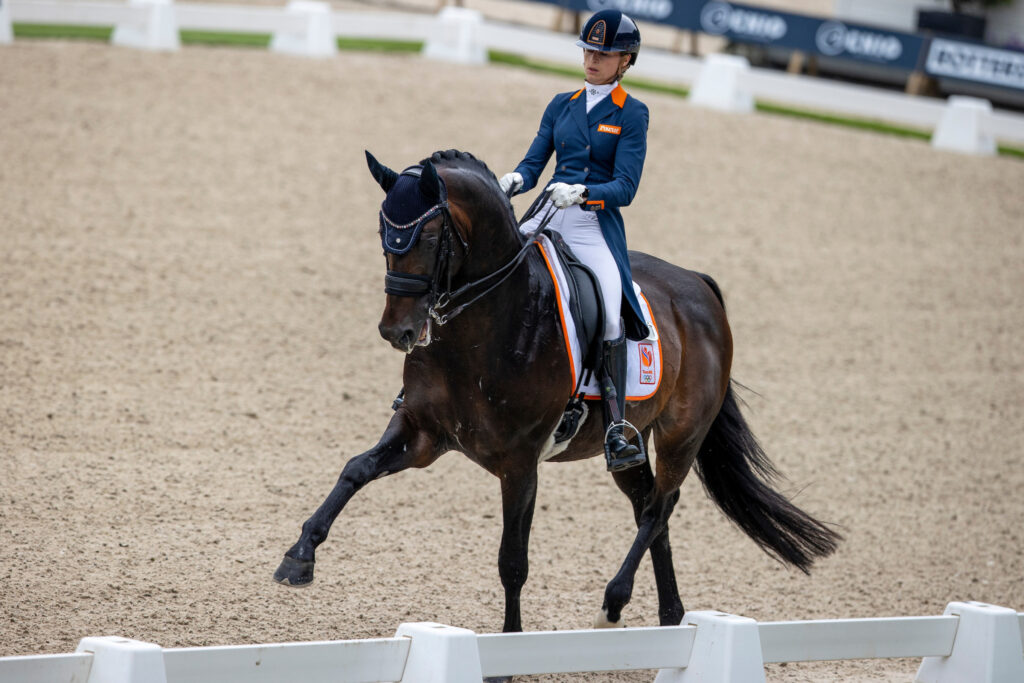
The legal battle surrounding the rejected Olympic registration of the dressage horse Hermès is far from over. Dutch equine lawyers Luc Schelstraete and Piotr Wawrzyniak were appointed by owner Joop van Uytert to represent the case involving the Royal Dutch Equestrian Federation (KNHS) and the International Equestrian Federation (FEI).
Although the Court of Arbitration for Sport (CAS) rejected the request for an interim injunction, Luc Schelstraete says additional legal steps are already underway. According to the lawyer, the case raises serious concerns about errors within the FEI’s administrative systems and how those mistakes impact athletes and horse owners.
Olympic Participation No Longer Possible
With the interim injunction rejected, Hermès’ participation in the Olympic Games is now effectively impossible. Schelstraete, however, had anticipated this outcome. “As a legal counsel experienced in these matters, I feared this could happen,” he said. “But on a personal level, you would hope for some degree of compassion and humanity from Lausanne.” Despite the setback, Schelstraete insists the case is far from finished. On behalf of Joop van Uytert, he confirmed that further legal action is likely. The KNHS, represented by Director of Top Sport Iris Boelhouwer, has also indicated it may support additional legal proceedings.
Hope Based on Previous CAS Ruling
Schelstraete’s team initially had confidence in the CAS due to their earlier success in the Karlsson case. In that case, CAS ruled that athletes and other parties should not be held responsible for administrative mistakes made by the FEI. “You would expect the court to follow its own jurisprudence,” Schelstraete explained. “In the Karlsson case, the athlete’s position was protected. CAS ruled that the FEI cannot hold athletes, organizers, or national federations responsible for its own errors.” However, the request for interim relief in the Hermès case was ultimately rejected, forcing the legal team to pursue other avenues.
Appeal Filed After Hermès Olympic Registration Decision
An appeal against the FEI Tribunal’s decision has already been submitted. “This appeal must be processed within ten days of the original ruling,” Schelstraete said. The appeal focuses on administrative mistakes in the FEI database, particularly concerning the nationality of Joop van Uytert.
FEI and President Ingmar de Vos Held Liable
Schelstraete has also taken the step of holding both the FEI and its president, Ingmar de Vos, legally liable for the database errors. According to the lawyer, documents submitted by the FEI during the tribunal proceedings confirm that the federation itself was responsible for incorrectly registering Van Uytert’s nationality. “I have formally summoned the FEI and its president to correct the mistake by 17:00 today,” Schelstraete stated. However, he remains skeptical about whether the federation will respond. “Knowing the FEI, they will probably do nothing.” He also attempted to address the issue through Frank Kemperman, chairman of the FEI Dressage Committee, but received no reply.
Potential Civil Lawsuit in the Netherlands
Another possible strategy involves a civil lawsuit in the Netherlands. The FEI typically argues that disputes must be handled exclusively in Switzerland. Schelstraete believes that argument may not apply in this case. “When an unlawful act causes damage, courts in the country where the damage occurred can also have jurisdiction,” he explained. Schelstraete says he would welcome a Dutch court reviewing the case.
Sporting and Financial Impact of the Hermès Olympic Registration Rejection
The dispute involves both sporting and financial interests. From a sporting perspective, Hermès could have been a major asset to the Dutch national dressage team, potentially strengthening its chances of winning an Olympic team medal. For Joop van Uytert, the stakes are also financial. A stallion competing at the Olympic Games would significantly increase its breeding value and international reputation.
“An Incredible Situation”
Schelstraete described the situation as highly unusual. “Imagine your city council mistakenly registering you as a Polish or Russian citizen. That simply wouldn’t happen,” he said. Yet according to the lawyer, a similar administrative mistake occurred within the FEI database, and the federation has refused to correct it. He also criticized the FEI Tribunal, claiming the body rarely rules against the federation. “Statistically, it’s remarkable that the tribunal almost never rules against the FEI,” he said.
Criticism of FEI Tribunal and KNHS Representation
Schelstraete also pointed to what he sees as a structural issue within the FEI Tribunal. Each national federation has the ability to nominate candidates for tribunal positions, but according to him, the KNHS has never submitted a candidate. “That means individuals from countries without a strong dressage tradition may be deciding cases that directly affect the sport,” he said. He argues that this lack of sport-specific expertise was already evident during the Karlsson case, where tribunal members appeared unfamiliar with the practical realities of equestrian competition.
Legal Battle Continues
While Hermès will not compete at the Olympics, the legal dispute between the FEI, Joop van Uytert, and their legal team is likely to continue. With an appeal already filed, liability claims issued, and a possible Dutch civil lawsuit on the table, the case could still have significant implications for administrative accountability within international equestrian sport.
Need Legal Advice in an Equine Dispute?
International equestrian sport and horse ownership can involve complex legal challenges, from FEI regulations and competition eligibility to ownership, breeding, and sales disputes.
If you are facing a legal issue in the equestrian world, the team at Schelstraete Equine Law specializes in international equine law and sports arbitration.
Contact Schelstraete Equine Law today to discuss your case or request legal advice.
Sources
Source Horses.nl
Photo by Hippo Foto